Shalom, mishpacha (family).
What makes someone a Jew? Asking this question can easily ignite a theological war. We thank Sarah Liberman, whose letter follows, for tackling a similar controversial subject that divides Christians and Jews alike.
For he is not a Jew who is one outwardly, nor is circumcision that which is outward in the flesh; but he is a Jew who is one inwardly; and circumcision is that of the heart, in the Spirit, not in the letter; whose praise is not from men but from God. (Rom. 2:28–29).
Many gentiles misinterpret this passage to justify Replacement Theology — the false claim that God has replaced physical Israel with the Church. Some extremists claim that Jewish people in Israel aren’t real Jews but are the “synagogue of Satan.” Likewise, ultra-Orthodox Jews claim that Messianic Believers are not Jewish despite their genetics. Satan loves to create deceptions to erase covenant identity.
Scripture is clear: God’s unconditional Abrahamic Covenant with ethnic Israel remains steadfast, as does His New Covenant with grafted-in gentiles. Neither covenant can be erased by argument or earned through effort, though humanity continually defaults to self-earned righteousness over grace-based salvation.
Law vs. Grace: The Galatian Trap
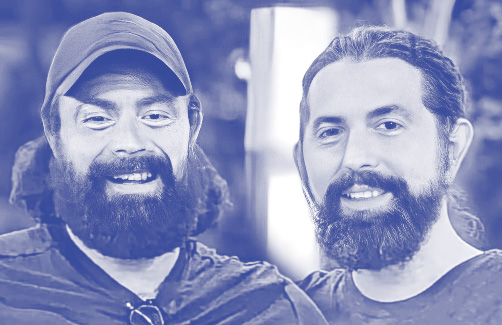
This debate took center stage in our Bearded Bible Brothers series, The Lobstermen, which focuses on the Great Commission and practical discipleship. Rabbi Shaul (the Apostle Paul) confronted this conflict when certain people sought to impose the Mosaic Covenant on Believers in the Galatian church.
For through law I died to law, so that I might live for God. I have been crucified with Messiah; and it is no longer I who live, but Messiah lives in me. And the life I now live in the body, I live by trusting in Ben-Elohim [the Son of God] — who loved me and gave Himself up for me. I do not nullify the grace of God — for if righteousness comes through Torah, then Messiah died for no reason! (Gal. 2:19–21, emphasis added).
Salvation comes by faith in Yeshua alone, not through Torah (Law). Yet “Judaizers” in Galatia demanded adherence to Mosaic Law — including circumcision — as essential for salvation. Even today, many Jewish Believers revert to Torah’s obligations and bind themselves under its curses as they try to earn righteousness.
For centuries, the conditional Mosaic Covenant functioned like a marriage contract that Israel repeatedly breached, resulting in God’s decree of divorce (Jer. 3:8–10). Though the Mosaic Law prohibited a man from remarrying his ex-wife (Deut. 24:1–4), the Father promised to restore Israel’s marriage, showing that “mercy triumphs over judgment” (James 2:13). Thus, God’s New Covenant reveals that anyone can enter into a new marriage contract with Yeshua by faith alone.
Cherry-Picking 613 Commandments
Paul challenged the Galatians’ reversion toward legalism:
O foolish Galatians, who cast a spell on you? Before your eyes Yeshua the Messiah was clearly portrayed as crucified. I want to find out just one thing from you: did you receive the Ruach [Spirit] by deeds [works] based on Torah [the Law], or by hearing based on trust? Are you so foolish? After beginning with the Ruach, will you now reach the goal in the flesh? (Gal. 3:1–3).
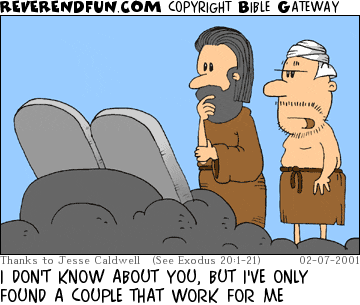
With 613 mitzvot (commandments) in the Law, which ones must Messianic Jews obey? The Hebrew Roots Movement cites Yeshua’s words — “If you love Me, you will keep My commandments” (John 14:15) — to argue for Torah observance. Yet the sacrifices commanded in the Torah cannot be enacted today without the Temple.
Yeshua simplified Torah into two supreme commandments: (1) “Love the Lord your God with all your heart, … soul, … mind, and … strength…” (Mark 12:30) and (2) “love your neighbor as yourself” (Mark 12:31). Under these two mitzvot, the entire law is satisfied, as Paul emphasized: “For all the law is fulfilled in one word, even in this: ‘You shall love your neighbor as yourself’” (Gal. 5:14).
Most Jewish Believers acknowledge that people aren’t justified by works, and that animal sacrifices are unnecessary because Yeshua was the final Passover Lamb. Still, many view the mo’edim (Feasts of the Lord), Saturday Shabbat, and dietary laws as mandatory. Paul warned against this thinking:
But now you have come to know God — or rather you have come to be known by God. So how can you turn back again to those weak and worthless principles? Do you want to be enslaved to them all over again? You observe days and months and seasons and years [Sabbaths, new moons, and feasts]. I fear for you, that perhaps I have labored over you in vain! (Gal. 4:9–11).
Modern Feast observances cannot follow the directives found in Leviticus 23 since there is no Temple or altar. Furthermore, rabbinic kosher rules misinterpret Exodus 23:19. Regarding the Sabbath, Yeshua emphasized: “The Sabbath was made for man, and not man for the Sabbath” (Mark 2:27). We Believers can draw close to Yeshua any and every day!
The Law of Love
Colossians 2:16 reminds Believers not to pass judgment regarding food, drink, festivals, or Sabbath observance. While these practices can hold value, following them out of duty brings spiritual bondage to the Law and its curses:
For all who rely on the deeds of Torah are under a curse — for the Scriptures say, “Cursed is everyone who does not keep doing everything written in the scroll of the Torah.” It is clear that no one is set right before God by Torah…. Messiah liberated us from Torah’s curse, having become a curse for us… (Gal. 3:10–11, 13, emphasis added)
The Torah served as a guardian to lead people to Yeshua (Gal. 3:24). “But now that faith has come, we are no longer under a guardian” (Gal. 3:25). Yeshua lived a sinless life, satisfying Torah so we wouldn’t have to do so! His blood on the Cross cleanses us and secures our right standing with God. Thus, we accept His grace and choose to live by His law of love.
Please check out The Lobstermen. Filmed against the scenic backdrop of Rockland, Maine (the lobster capital of the world), this series uses the lobster trade to illustrate Yeshua’s call to be fishers of men — both Jews and gentiles (lobsters). These lessons in discipleship will help you grow in faith and equip you to witness to the lost.
Love, Joshua and Caleb

P.S. Thank you for partnering with us to spread the Gospel of Yeshua to the ends of the world. Your faithful support makes this ministry possible.
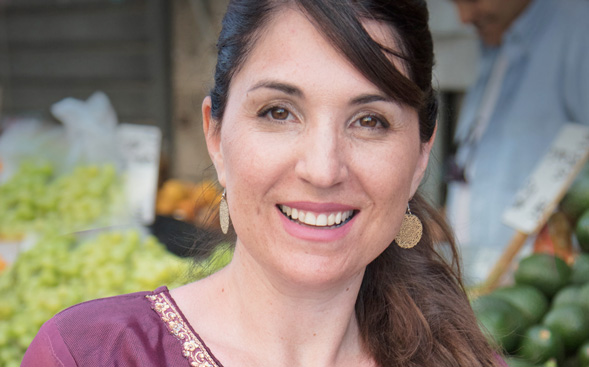
FROM SARAH, OUR SABRA
ON THE GROUND IN ISRAEL
Shalom from Israel. On a Saturday morning in Jerusalem, buying a cup of coffee has recently created an uproar. Outside Cafe BaSimta (Cafe in the Alley) — a new coffee shop near Jerusalem’s famous Mahane Yehuda market — ultra-Orthodox Jews (Haredi) have protested weekly. As police separate demonstrators from customers, secular Israelis arrive for coffee while arguments about Shabbat erupt in the street. At the center of the commotion stands operator Yoel Ben David, a Messianic Jew linked to Jews for Jesus, the California-based Jewish evangelism ministry.
What began as the opening of another cafe quickly became a battle over what kind of city Jerusalem should be. The coffee shop has likewise generated an unexpected national conversation about Messianic Jews and faith in Yeshua (Jesus).
The Coffee War
BaSimta opened earlier this year, and its decision to operate on Saturday immediately made it controversial. For observant Jews, Shabbat is sacred because it’s rooted in Scripture: “Remember the sabbath day, to keep it holy” (Ex. 20:8).
Commercial activity on Shabbat is deeply offensive to many Orthodox Jews, particularly in Jerusalem. However, the city isn’t exclusively Haredi. Thus, debate over what should be open on Shabbat has marked Israel’s religious-secular argument for decades.
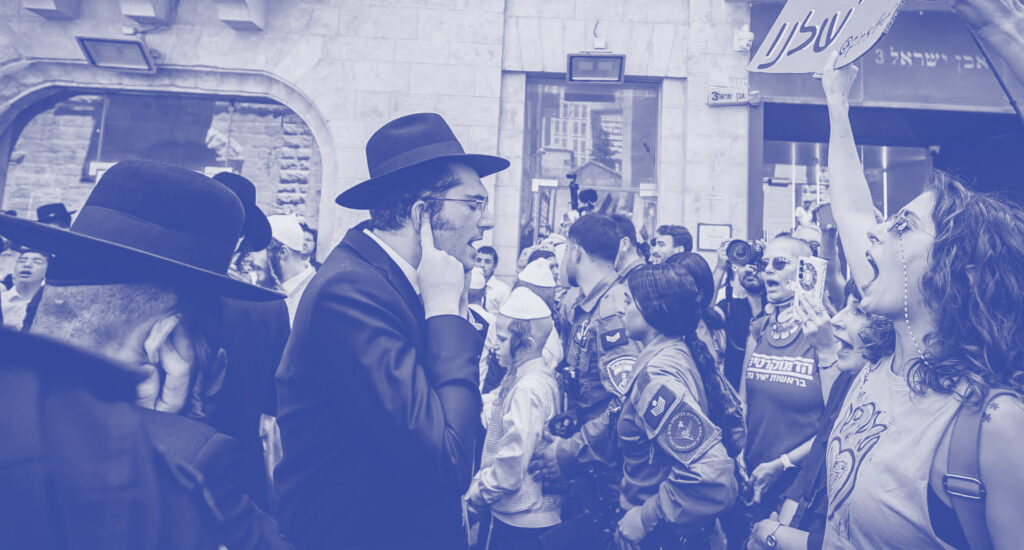
Jerusalem’s Jewish population is far more religious than Israel as a whole — roughly 46% Haredi versus 13% secular. For secular residents, every cafe, venue, or transportation battle relates to one question: Is there still room for their way of life here?
Haredi protesters see the opposite. To them, any business open on Shabbat erodes the day’s sanctity. Demonstrators stated that they viewed BaSimta as part of a broader “secularization” of Jerusalem and vowed to continue their campaign.
News of the cafe’s affiliation has poured fuel on the fire, though Ben David has been open about it. “The company that operates the cafe is owned by a Jews for Jesus company,” he told Israeli newspaper Ynet. Ben David added, “I am also a Jew for Jesus. I don’t hide it.” He insists, however, that walking inside doesn’t mean that customers are entering an evangelistic meeting.
“We are a cafe,” Ben David explained. “There aren’t crosses covering the walls. Someone who wants to talk about faith is welcome to do so, but someone who simply wants a cup of coffee is equally welcome.”
The controversy soon reached Israel’s political establishment. Former defense and foreign minister Avigdor Liberman, a longtime opponent of Haredi political influence, visited the cafe. “I believe in the principle of ‘live and let live,’” he asserted. “It cannot be that drinking coffee on Saturday morning becomes an act of civic heroism.”
Secular Israelis who support the cafe ask: Who gets to decide how I live as a Jew? Most of them aren’t endorsing Jews for Jesus — some actually withdrew their support once they learned who was behind it. Others see the issue related to personal liberty; they don’t want Haredi protesters deciding where they can drink coffee.
That explains the strange, ongoing scene outside BaSimta — secular Jews forming a protective barrier around a cafe tied to an organization devoted to telling Jews about Yeshua.
Are We Free or Not?
Beyond the spectacle lies a question that Messianic Jews are debating: Should the cafe have opened on Shabbat?
Some say no.
While we believe that salvation comes through Messiah rather than through Torah observance, Jewish Believers remain Jews. Shabbat is one of Judaism’s most central practices. Paul wrote: “To the Jews I became as a Jew, in order to win Jews” (1 Cor. 9:20). Imagine the testimony: We believe in Yeshua, and because we are Jews who treasure the Scriptures and love our Jewish neighbors, our cafe rests on Shabbat.
Others, however, answer yes — the cafe should be free to open any day.
Messianic Believers know that righteousness doesn’t come from observing Shabbat. The New Testament gives Believers remarkable freedom concerning sacred days, as Paul* emphasized: “One person esteems one day as better than another, while another esteems all days alike. Each one should be fully convinced in his own mind” (Rom. 14:5).
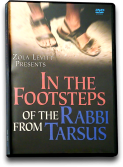
*Regarding Paul, please see our DVD set In the Footsteps of The Rabbi from Tarsus.
The apostle added: “Therefore let no one pass judgment on you in questions of food and drink, or with regard to a festival or a new moon or a Sabbath” (Col. 2:16). From this view, closing under pressure could communicate that protest, not conscience before God, determines how Yeshua’s followers live.
Even Bad Advertising is Good
Ironically, before the protests, few Israelis had heard of BaSimta. Now, Israeli media cover it, politicians visit, crowds arrive, and videos go viral. In trying to shut it down, opponents have made it famous.
A greater irony is that the demonstrations bring police officers, reporters, and photographers to the area on Shabbat, causing even more people to break the very commandment that protesters hope to protect.
Beneath it all, something unexpected is happening in Jerusalem. Thousands of Israelis who might never attend a Messianic congregation, or read a Jews for Jesus leaflet, or search online for information about Yeshua are now hearing about “Messianic Jews” and “Jews for Jesus” through media and in conversations about a coffee shop. For a little cafe tucked away “in the alley,” that’s quite an achievement.

Im tirdefu lada-at oto —“Press on to know HIM!” (Hosea 6:3 NLT)
Many blessings from Israel,

Sarah Liberman
P.S. In September, the management of BaSimta decided to close the cafe on Shabbat. Still, don’t be surprised if the Bearded Bible Brothers and their camera crew stop by one day for some Jewish java at BaSimta — and interview some caffeinated followers of Yeshua. Watch out, Starbucks! —Mark
ZLM’s Websites
To better benefit from our ministry’s expansive resources, please visit all three of our websites:
Thousands of ZLMers regularly visit Levitt.com to:
- Watch our newest weekly installment of the Bearded Bible Brothers and access hundreds of archived 30-minute episodes (including those from Our Jewish Roots and Zola Levitt Presents) for free viewing
- Read our monthly news magazine, LLX news reports, Biblical and prophetic essays, Q&A, Blog, Daily Devotionals, and more
- Order our Bible teaching books, DVDs, CDs, and specialty items
This newer website allows you to:
- Find online Bible-teaching videos of the BBBs’ recent television series
- Subscribe to the BBBs’ free YouTube channel
- Learn about Joshua and Caleb’s ministerial endeavors over many years
Patreon.com/BeardedBibleBonanza
- See our newest public and exclusive posts
- Browse our recent and most popular Bible, history, and prophecy lessons
- Join for free, or, for as little as $5 per month, get an all-access pass to:
- Never-aired-elsewhere content
- Behind-the-scenes moments
- Older BBB teaching archives
- Faith-filled fun for the whole family
Bearded Bible Brothers® TV programs in October
This month, we continue Return of the Nephilim. This series uncovers the mystery behind the Nephilim, the origin of all false religions, and Satan’s plot to use the Beast as his genetic seed to deceive the nations.
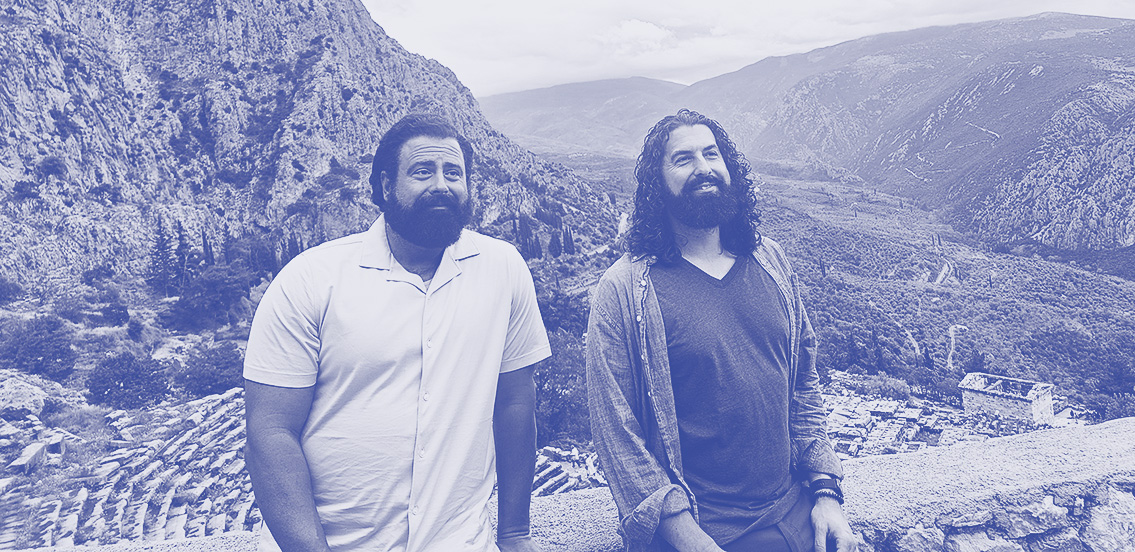
The Chimera and the Beast — From cloning to UFO phenomena, Satan continues genetic tampering, preparing mankind for the arrival of his perfect genetic offspring. As Joshua and Caleb ascend the ruins of the city of Delphi and Acrocorinth, they explain the Beast’s disclosure on planet Earth.
The Nephilim Debate, Vol. 2 — The return of the Nephilim in End Times takes center focus as the Bearded Bible Brothers hear from Bible scholars regarding Satan’s future agenda. Mondo Gonzales, Derek Gilbert, Dr. Douglas Hamp, Dr. Jeff Kinley, and Gary Wayne share their insights.
City of Seven Hills and the Nephilim Prophet — The brothers arrive in Istanbul, the prophetic frontline for the End Times’ gentile government of the Beast. Accompanied by Hirchie Schaffner and Dave Pavey, they investigate the future emergence of Satan’s menacing Nephilim cohort, the False Prophet.
The Mark of His Name — From Turkey, Joshua and Caleb continue to reveal Satan’s designs for a final Nephilim-centered world religion, and his great betrayal of his servants of evil. From the ruins of Pergamon, the enigma of the Beast’s insidious “mark” comes to light.