Shalom, faithful Friends.
“With great power comes great responsibility.” In the 2002 movie Spider-Man, Ben shares this timeless wisdom with his nephew Peter — a radioactive, human-spider hybrid with extraordinary powers. This scenario description seems a perfect match for the themes that we are exploring in our new series, Return of the Nephilim. Though Uncle Ben’s statement isn’t from the Bible, it holds Biblical truth.
Yeshua’s admonition, spoken almost 2,000 years ago, rings familiar: “…From everyone who has been given much, much will be demanded; and from the one who has been entrusted with much, much more will be asked” (Luke 12:48). Why then do we — as Christians first and Americans second — find such difficulty in supporting the Jewish State of Israel and confronting Iran, the Middle East’s schoolyard bully?
Before Yeshua ascended into Heaven, He not only commissioned His followers to lead the entire world to the Truth but also placed us as His “hall monitors” on Earth. Yeshua gave us His Power of Attorney to take dominion in His name and uproot the enemy’s wicked plans to ensnare humanity (Mark 16:15–19).
Proverbs 24:11–12 declares, “Rescue those being led away to death; hold back those staggering toward slaughter. If you say, ‘But we knew nothing about this,’ does not He who weighs the heart perceive it? Does not He who guards your life know it? Will He not repay everyone according to what they have done?”
There are numerous grounds for uprooting the Islamic Republic of Iran’s hold on Persia. One is their desire to ignite a nuclear World War III to hasten the return of Al-Mahdi, the Islamic messiah. Another is Iran’s machinations to form a one-world Caliphate to accomplish “One nation under Allah, with tyranny and inequality for all.” Still another relates to the genocidal activities — past and present — of the Islamic Revolutionary Guard Corps (IRGC) toward the Iranian people, along with the IRGC’s often-voiced pledge to destroy the Zionist regime. All of these are justifiable reasons to continue the U.S. and Israel’s war to end Iran’s reign of terror.
James 4:17 succinctly states, “If anyone, then, knows the good they ought to do and doesn’t do it, it is sin for them.” Beyond the sorrow over the physical lives of innocent civilians who face death each day, our greatest concern is for the eternal souls who are doomed to hell if they don’t choose the free gift of Yeshua’s salvation. But how can Iran’s people, shutoff from the world, hear the truth while their rulers hold them in bondage?

credit: HormozShariat.com

credit: LadanBoroumand.com
Our Messiah has already done the heavy lifting. Ladan Boroumand, a human rights advocate and scholar, stated: “Iran today is witnessing the highest rate of Christianization in the world.” Outreaches like Dr. Hormoz Shariat’s Iran Alive Ministries and Christian broadcaster SAT-7 verify that Yeshua is appearing to Persians in dreams and visions. Even so, an urgent need exists to disciple new Believers in Yeshua who are hungry to learn how to live. Pastors of Iranian “underground” churches confirm the need for Christians on the ground who will train Believers in God’s ways.
Proverbs 3:27–28 commands, “Do not withhold good from those to whom it is due, when it is in your power to act. Do not say to your neighbor, ‘Come back tomorrow and I’ll give it to you’—when you already have it with you.”
We have the power to act now, both naturally and spiritually. At stake is an Acts 2 moment, where the Gospel breaks free and spreads throughout the entire Middle East. The true conflict is the spiritual battle against principalities and powers (Eph. 6:12) that have enslaved Persia, Lebanon, Gaza, Iraq, Yemen, and even Syria for decades.
Over a year ago, we brothers followed the Holy Spirit’s direction to go to Damascus, Syria. Our plan was to film television programs related throughout the Isaiah 17 Oracle of Damascus and Rabbi Shaul’s “Damascus Road” experience (Acts 9:1–9). After we spent a night in that war-torn city, however, our Heavenly Father revealed His true mission for us: We were to prepare for the coming outpouring of His presence in the Middle East.
That night, the Holy Spirit led us to witness to our Syrian film crew, who barely spoke English. Until that time, we concealed our identity and the purpose for our trip. Yet, the Spirit told us to divulge our Jewish identity to our Syrian “fixer.” To our amazement, he declared his desire for love and truth and used his only known English expletive to curse Hitler. Then, he added: “Why should I hate you or any Jew? What have you done to me? Nothing. If we continue to hate, it will lead to death.” At that, we shared the Good News of Messiah’s love for him!
Micah 6:8 proclaims: “He has shown you, O mortal, what is good. And what does the Lord require of you? To act justly and to love mercy and to walk humbly with your God.”
Now is not the time for Yeshua’s followers to sit on the sidelines, merely watching God unfold His plan for the Last Days. As Believers, we must step into the frontlines in obedience and unity. We have a job to do — fighting evil in both the natural and spiritual worlds, so that His Gospel may triumphantly advance.
Love, Joshua and Caleb

P.S. Thank you for partnering with us to preach the truth — both on and off-camera. The Body of Messiah is strongest when we are united!

FROM SARAH, OUR SABRA
ON THE GROUND IN ISRAEL
Dear Friend,
Shalom from the Holy Land.
In difficult negotiations, people often leave situations unresolved while working toward a solution. But we have a saying in Israel: “Whatever is temporary will most surely become permanent.” That perspective describes how many Israelis view the never-ending diplomatic talks in the Middle East. Since the ceasefire with Hamas in January 2025, the terrorist group remains armed and active. Likewise, Hezbollah continues to create havoc, despite the ongoing negotiations with Lebanon that began in November 2024.
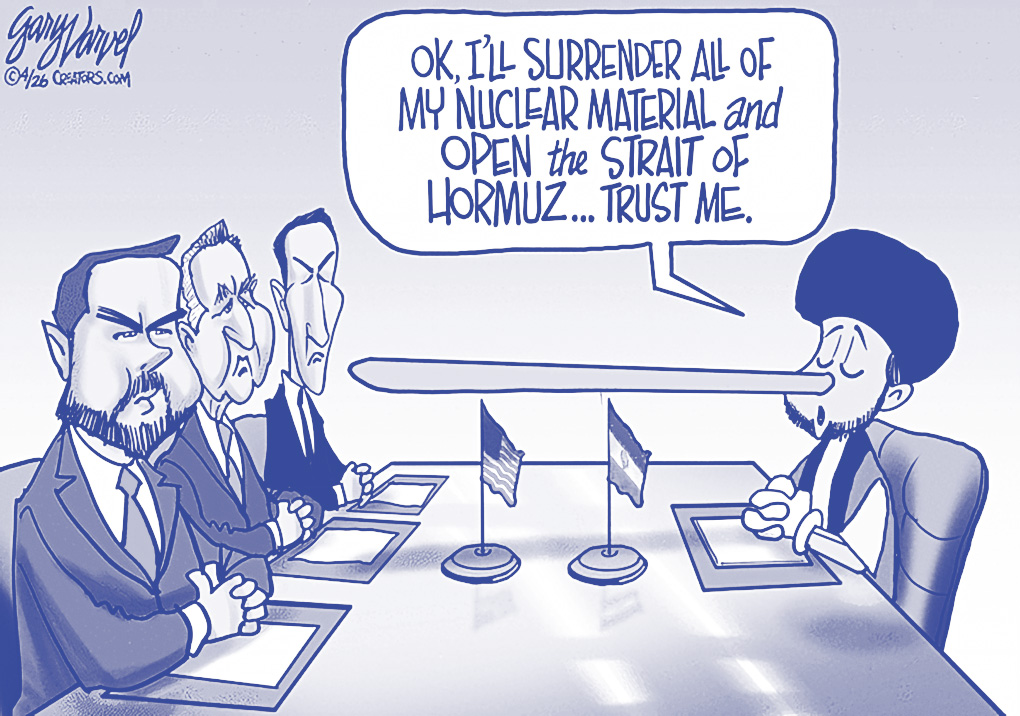
Now, as the U.S. and Iran pursue yet another diplomatic agreement to end hostilities and abolish Iran’s nuclear program, Israelis ask a familiar question: Does diplomacy eliminate a threat or merely delay it? This question reveals much about how Israelis view Iran and our changing relationship with the U.S.
Lasting Security?
Israelis are not opposed to diplomacy in principle. However, most Israelis believe that the U.S. ended the military operation against Iran too soon. The consensus here is that the premature negotiations signaled weakness and reduced the likelihood of a favorable outcome for our long-term security.
Israelis are greatly concerned that any agreement won’t eliminate the dangers of Iran’s nuclear infrastructure, ballistic missile capabilities, and network of regional proxies. Thus, a deal that addresses one concern while ignoring the others may offer a temporary calm but won’t provide genuine, lasting peace.
We had hoped that the war would end Iran’s nuclear program and weaken the ruling Islamic regime so that the Iranian people could topple it and initiate positive change. It seems that neither of these wishes came true, so most Israelis strongly oppose any agreement with the current regime.
Differing Perspectives
The U.S. has understandable reasons to pursue diplomacy with Iran. Most American leaders want to avoid a prolonged Middle Eastern conflict, maintain stability in global energy markets, protect international commerce, and avoid backlash for midterm elections. From Washington’s perspective, reducing military actions and building opportunities for future diplomatic engagement are worthwhile goals.
Israel’s perspective is different. For us, Iran is more than just one of our many global concerns. The Islamic Republic of Iran poses an existential threat to our survival. As such, despite significant achievements by Israel and the U.S. in the recent war, many Israeli officials consider it a failure rather than a victory because the underlying danger hasn’t been neutralized.
A Bad Deal?
One of our primary concerns is Iran’s history of concealing its uranium enrichment and violating international agreements that regulated its nuclear activities. Most likely, Iran still has the infrastructure, expertise, materials, and determination to continue pursuing nuclear weapons. Therefore, any agreement allowing Iran to maintain uranium enrichment capabilities will be deemed a failure in Israel’s eyes.
Diplomacy supporters counter that stringent inspections and verification procedures can effectively manage these risks. Yet Israelis remain skeptical because verification only works when violations are met with consequences. Israelis also question whether future U.S. administrations will have the desire or courage to punish Iranian policy violations.
Another major issue is the call for sanctions relief and the release of frozen Iranian assets. Many Israelis believe that Americans don’t understand the true nature of Iran’s fanatical leadership. Economic incentives won’t secure meaningful concessions from a regime that pursues ideological objectives. Instead, restored financial resources will only strengthen Tehran’s power and enhance its regional hostility.
Many Western observers believe that the Iranian regime is now at its weakest point. But providing financial relief to Iran will only prolong the regime’s survival. Israeli officials warn that funds for economic stabilization won’t help the Iranian people; instead, Iran’s leadership will redirect those funds to projects intended to destroy Israel and the U.S.
Many Israelis are also troubled that negotiators have ignored Iran’s ballistic missile program and proxy network. These are not secondary concerns for Israel. Long-range missiles, precision-guided weapons, unmanned aerial systems, and heavily-armed proxy organizations still represent a significant threat to Israel’s existence and to the stability of the Middle East.
The situation in Lebanon illustrates these concerns. Operating as a state within a state, Hezbollah remains one of the world’s most heavily-armed militant groups. Iran’s insistence that Lebanon be included in the ceasefire arrangements has restricted our military freedom and threatened our security. While Western leaders pressure Israel not to bomb Beirut, where Hezbollah maintains its headquarters, Israelis emphasize Hezbollah’s continuing assaults on our northern border and drone attacks that have killed IDF soldiers.
Wider Implications
The Indo-Pacific region has become America’s primary theater of geopolitical challenge. U.S. foreign policy is increasingly influenced by competition with China. American policymakers therefore seek to prevent recurring Middle Eastern crises from consuming U.S. resources and attention.
Meanwhile, China benefits from continuing access to Iranian oil and seeks to expand its diplomatic and economic influence. Israelis wonder whether concerns about Iran’s long-term capabilities will receive the same level of attention as more immediate concerns about stability, trade, and energy supplies.
Here in Israel, we are preparing for national elections that could occur as early as September. For many Israelis, the political survival of Prime Minister Netanyahu and his Likud Party rests entirely on the final outcome of the war. The continuing debate over military service for ultra-Orthodox Israelis (see my August 2024 Personal Letter on this subject) already has created political challenges for Netanyahu’s governing coalition.
We are also deeply concerned about what lies ahead for the bond between the U.S. and Israel. Israeli strategists recognize that administrations change, political priorities evolve, and public opinion grows against Israel. Therefore, our current government has begun pursuing a ten-year plan to reduce American financial and military aid and improve self-sufficiency in our military capabilities.
Pray For Peace
For Israel, the major issue is not what any future agreement says on paper. Instead, our primary concern is whether an agreement will transform the reality that has shaped our region for decades and create a genuine foundation for Israel’s security and peace. Therefore, I continue to ask you to Sha-a-lu sh’lom Yeru-shalayim — pray for the peace of Jerusalem (Ps. 122:6).

Im tirdefu lada-at oto —“Press on to know HIM!” (Hosea 6:3 NLT)
Many blessings from Israel,

Sarah Liberman
P.S. For a one-minute overview of the announcement that sparked this policy shift, see Netanyahu’s interview at YouTube.com/shorts/g7pAnlLgtRk.
ZLM’s Websites
To better benefit from our ministry’s expansive resources, please visit all three of our websites:

Thousands of ZLMers regularly visit Levitt.com to:
- Watch our newest weekly installment of the Bearded Bible Brothers and access hundreds of archived 30-minute episodes (including those from Our Jewish Roots and Zola Levitt Presents) for free viewing
- Read our monthly news magazine, LLX news reports, Biblical and prophetic essays, Q&A, Blog, Daily Devotionals, and more
- Order our Bible teaching books, DVDs, CDs, and specialty items
This newer website allows you to:
- Find online Bible-teaching videos of the BBBs’ recent television series
- Subscribe to the BBBs’ free YouTube channel
- Learn about Joshua and Caleb’s ministerial endeavors over many years
Patreon.com/BeardedBibleBonanza

- See our newest public and exclusive posts
- Browse our recent and most popular Bible, history, and prophecy lessons
- Join for free, or, for as little as $5 per month, get an all-access pass to:
- Never-aired-elsewhere content
- Behind-the-scenes moments
- Older BBB teaching archives
- Faith-filled fun for the whole family
Bearded Bible Brothers® TV programs in July
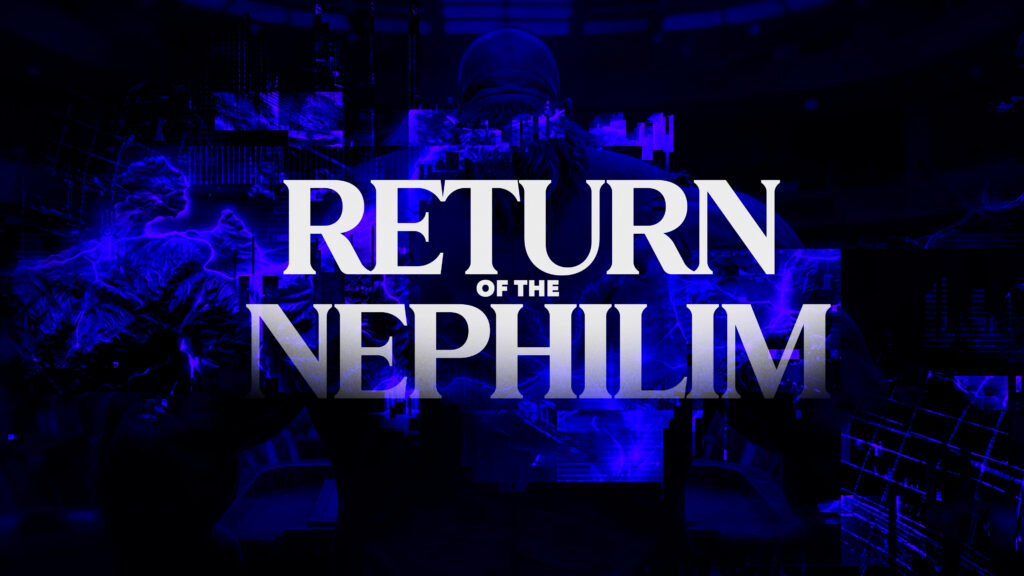
This month, we begin our new series, Return of the Nephilim. From the earliest pages in Genesis, we see Satan’s schemes to stop the Seed of the woman from crushing the seed of the serpent. As in the days of Noah, however, so shall it be at the return of the Son of Man. The Bearded Bible Brothers (BBB) undertake a globe-trotting journey to uncover the mystery behind the Nephilim, the origin of all false religions, and Satan’s plot to use the Beast as his genetic seed to deceive the nations.
Mount Eden and the Genetic Prophecy
The brothers’ most challenging quest yet involves laying the groundwork for the “Seed Wars” prophesied in Genesis 3:15. They ascend the Temple Mount in Jerusalem to unlock the mystery of Mount Eden, then board a plane to Crete to climb Mount Ida.
The Divine Council and the Bene Elohim
El Elyon’s divine council of Bene Elohim (Ps. 82) comes into focus as Joshua and Caleb ascend Mount Olympus in Greece. Satan’s counterfeit is exposed with the ancient legend of Zeus and the assembly of 12 Olympian gods.
Mount Hermon and the Rebellion of the gods
The BBB ascend Mount Hermon with Evangelist Israel Hanna and Sergeant Major Chaim Malespin to uncover the sins of the Bene Elohim — the fallen rebellious angels of Genesis. The team reveals Satan’s game plan for the ages with the Genesis 6 perversion of mankind’s seed.
Birth of the Nephilim
In a BBB first, the team treks the Golan Heights to the infamous Circle of Giants, Gilgal Rephaim, where demonic activity nearly waylays their plans. The brothers then visit Amman, Jordan to unveil the Nephilim personified in the Temple of Hercules.
The Titanomachy and Tartarus
From ancient Athens, Joshua and Caleb dissect Satan’s counterfeit of God’s righteous judgment against the Bene Elohim. What truths lie behind the Titanomachy, the mythical war of gods and titans? How does hell or Tartarus fit in their punishment?